

Construction and renovation
How do you assess premises for a shop or supermarket in Spain?
Before leasing premises for a shop, check whether you can receive goods, store them and serve customers in your chosen format. A shopfront on a busy street is useful, but a narrow entrance, insufficient electrical capacity or awkward unloading can make everyday operations expensive.
For a grocery shop, refrigeration and food-handling conditions also matter. Identifying constraints before signing is usually easier than changing the layout after ordering shelving and display cases.
What should I define before looking for premises?
Start with the product range and describe the operations. A clothing shop, a mini-market selling packaged food and a supermarket with a meat-cutting counter need different premises.
Establish whether you will sell by weight, prepare food, bake or fulfil online orders. Then define storage volumes and delivery frequency. Additional services may need separate areas, equipment and administrative procedures.
Is a shop permitted at the chosen address?
This is checked against the property documents, planning conditions and specific activity. Commercial use does not automatically confirm that any type of shop is possible.
If retail operated here previously, compare the old documents with the new product range, area and works. A previous shop without refrigeration does not establish readiness for food retail. Before signing, identify alterations requiring the owner’s consent or affecting shared building elements.
Can suppliers unload goods properly?
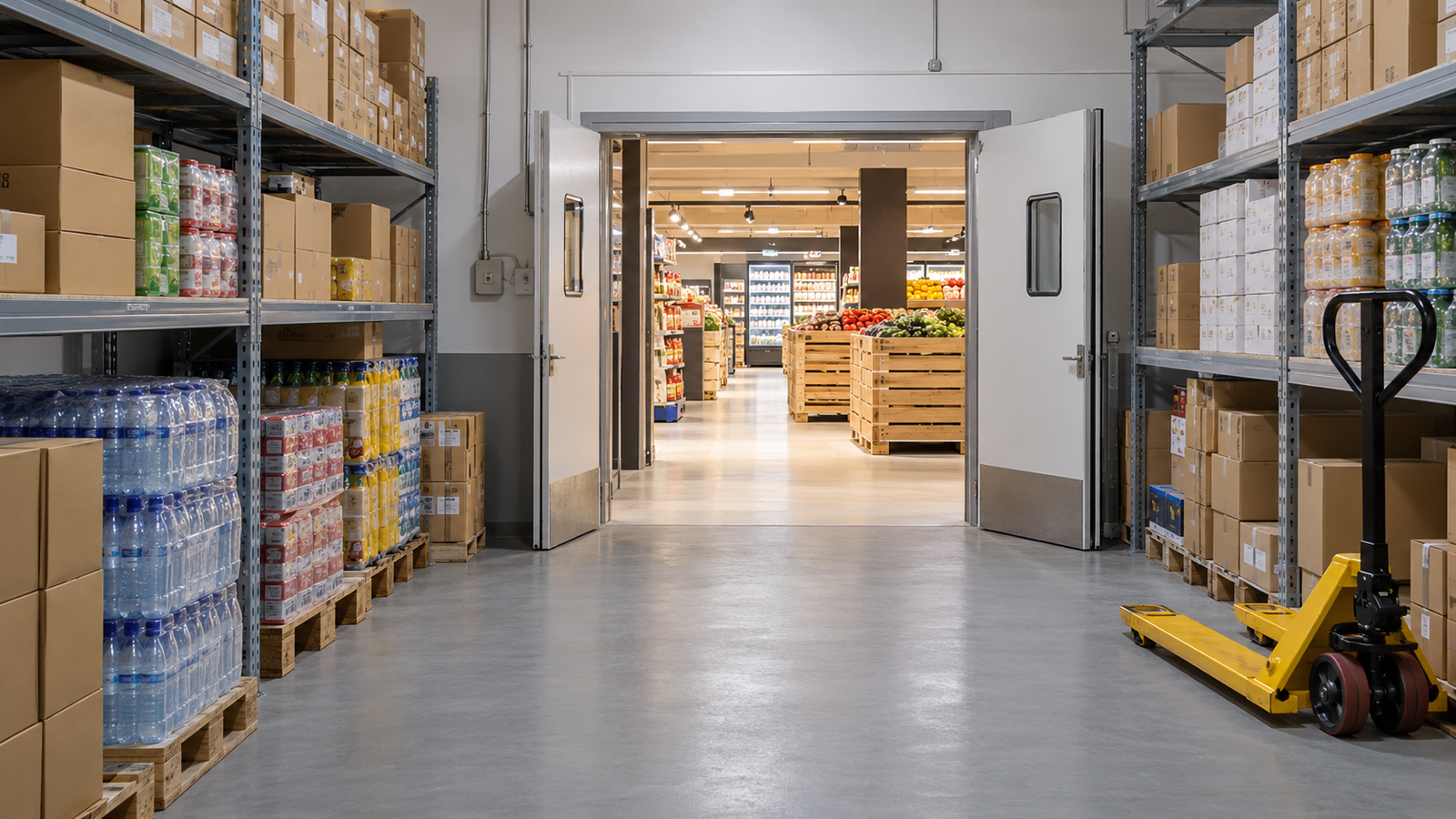
Check the entire route from the vehicle to storage. Stopping possibilities, local unloading conditions, door widths, steps and internal turns all matter.
A separate service entrance is useful but does not guarantee a suitable route. Carrying goods manually through the sales floor affects delivery schedules, staff work and customer movement.
Before choosing a property, compare the route with actual delivery dimensions: boxes, trolleys or pallets. Do not assume a van can stop outside the door based on a single viewing.
How much space will remain for sales?
The layout, including storage and necessary service areas, will establish this. The total area in the advert is not the area available for displaying goods.
Before ordering retail equipment, mark:
- shelving, checkouts and queue areas;
- circulation and escape routes;
- receiving, storage and shelf replenishment;
- toilets and access to building services.
Check shelving height and placement alongside safe operating conditions. Heavy stocks, cold rooms and equipment may require assessment of the ground-bearing or suspended floor, particularly above a basement or on a mezzanine.
Will there be enough electrical capacity for refrigeration?
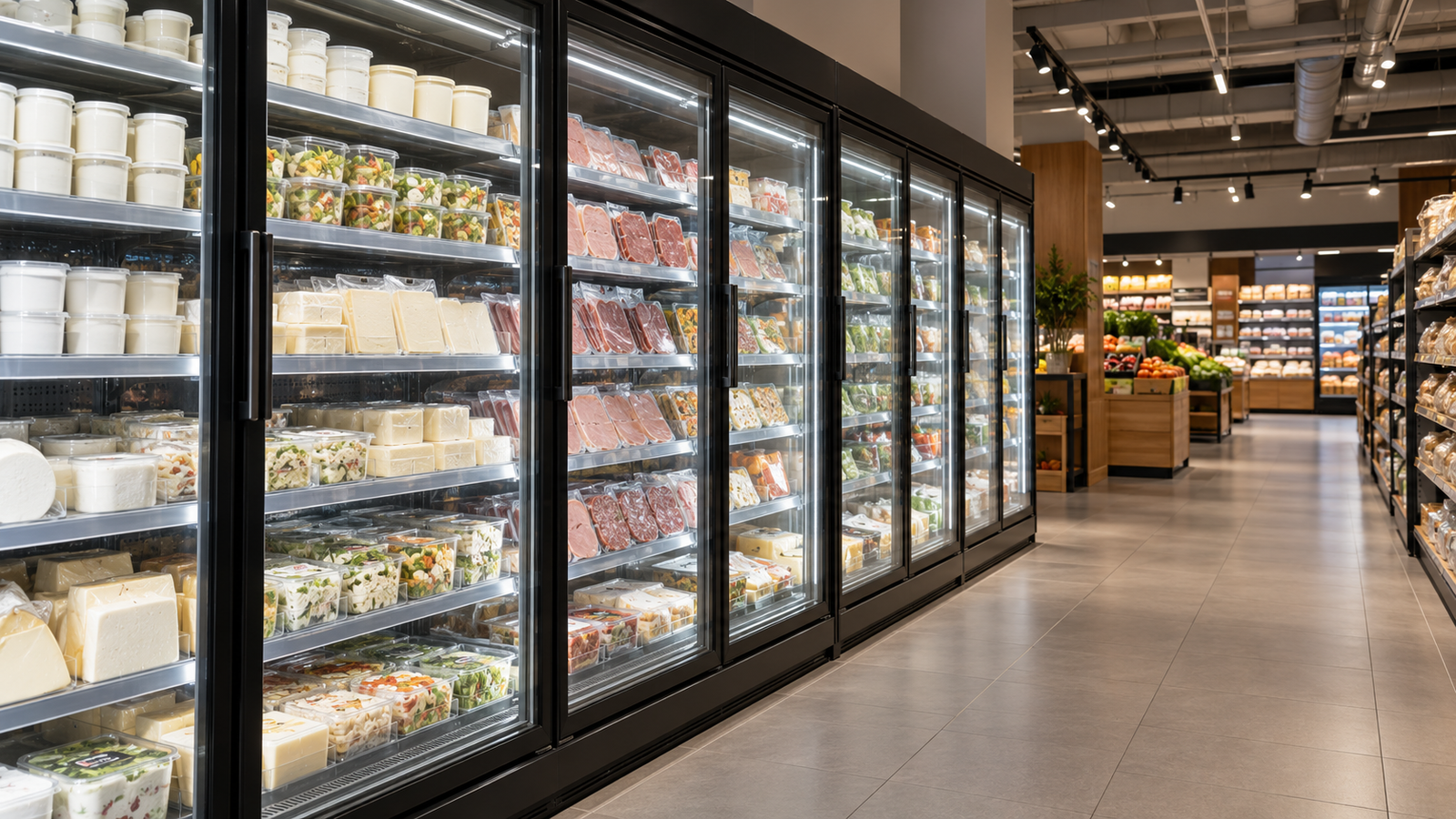
The answer depends on the chosen equipment and existing installation. Allow for display cases, cold rooms, lighting and climate-control systems, plus additional loads if food preparation is planned.
Before ordering, prepare an equipment schedule with technical data. A specialist can check the supply, circuits, protection and feasibility of increasing capacity. Also establish where refrigeration heat will be discharged and how units will be maintained.
Refrigerators also affect sales-floor temperature. Installation costs cannot be reduced to the price of display cases and the availability of spare sockets.
What changes if the shop sells food?
Assess the premises against the product range and food-handling operations. Chilled and frozen goods need appropriate storage conditions, including during receipt and replenishment.
Selling packaged products and handling unpackaged food require different solutions. Before renovating, define storage, cleaning, waste-handling areas and necessary water points. Clarify the food-hygiene administrative requirements for the selected format.
Adding a meat counter or in-house baking after opening may require a design revision. Discuss these plans during the first property assessment.
What else should I check in Valencia?
In the city of Valencia, clarify the works and opening procedures for the specific project. The procedure depends, among other things, on the retail activity, area and nature of the work. It cannot be chosen solely from the word “shop” or copied from a neighbouring municipality.
Before the transaction, check entrance accessibility, signage conditions and unloading arrangements. For refrigeration units and outdoor equipment, establish permitted locations and noise effects on neighbours. Define the opening document set before renovating.
What if I have already signed the contract?
First compare the contract, documents and property condition with future operations. Identify what prevents launch: deliveries, capacity, storage or administrative procedures.
Then compare adaptation options. Changing the product range or delivery arrangements can sometimes reduce the work needed. Order equipment after checking its placement and connections, so you do not have to adapt the premises to a purchase already paid for.
How can NEXEVO assess premises for a shop?
NEXEVO can assess the property’s documentary and technical condition and coordinate relevant specialists. The assessment helps identify necessary work and constraints before leasing or buying.
If the premises have already been selected, an assessment helps clarify the sequence of design and preparation for opening.
Planning a shop or supermarket in Spain? Contact NEXEVO for a premises assessment before signing, ordering equipment or starting renovation.
Frequently asked questions
This must be checked for the specific property and product range. Assess the documents, food storage, building services and necessary works.
Keep reading
Can you open a car wash on your chosen plot or premises in Spain?
Assess a car wash against water, wastewater and vehicle movement.
How do you assess a building for storage or small-scale production in Spain?
Assess storage and production against actual goods and operations.
Can you install cold storage in your chosen premises in Spain?
Cold storage needs coordinated insulation, refrigeration, power and logistics.